
The Gap Between Aspiration and Action on the Buddhist Path
Initially, we study the texts and contemplate their meaning with discipline, developing the foundation for cultivating the mind of renunciation and Bodhicitta. The cultivation of renunciation and Bodhicitta should be integrated into both meditation and post-meditation sessions. After finishing our meditation practice, we must bring the practice of renunciation and Bodhicitta into our daily life, minimizing the gap between the two sessions until they eventually become one.

How to Achieve The Three Principal Aspects of the Dharma Path?
As lay practitioners, if we focus on the three principal aspects of the path, we have the potential to achieve awakening within this lifetime. By cultivating Renunciation and Bodhicitta, we establish a strong foundation that allows us to wholeheartedly study and practice the Correct View of Emptiness. This, in turn, increases our chances of awakening.

The Four Stages of Madhyamaka(Part four)
The fourth stage regards free of mental fabrications as equipoise-nature, which refers to the oneness of the mind's true nature and the phenomena arising from the mind ––– Emptiness and luminosity. The phenomena arising from the mind refer to things we see, hear, and feel. All of them are emptiness and luminosity.
The Four Stages of Madhyamaka(Part three)
The third stage considers dependent origination as the absence of mental fabrications. What does the absence of mental fabrications mean? It means that the authentic experience of Emptiness is not gained through mental conceptualizations or feelings, but rather through a true, direct, and distinct understanding of Emptiness.
The Four Stages of Madhyamaka(Part two)
The second stage is to consider emptiness as all phenomena. That is, emptiness is form.

The Four Stages of Madhyamaka(Part one)
The first stage involves considering all phenomena as empty in nature. That is, Form is Emptiness.

Why do the ways ordinary people seek happiness inevitably lead to suffering?
The Buddha taught that when you cannot obtain what you seek, that is the suffering of unfulfilled desire. When you do obtain it, it will eventually change and you will be unable to hold onto it, giving rise to the suffering of separation from what one loves. In the process of grasping, you want to take it and so do others.This is called the suffering of encountering what one hates.
The common mistakes in spiritual practice (Part three)
What is the cause of this issue? An experienced instructor is lacking. Without the necessary instructions provided by an instructor, practitioners cannot bridge the theory and practice of Buddhadharma alone, which is truly a significant issue.

The common mistakes in spiritual practice (Part two)
Many practitioners strive to achieve awakening or enlightenment in one lifetime, but they must realize that sitting on a cushion to meditate alone is not enough. If a person frequently enters the stages of Joy, Clearness, and No Discursive Thoughts through meditation, it could be a sign that they may easily be reborn in the realm of heaven or the realm of the long-lived god.
The common mistakes in spiritual practice (Part one)
Without taming our minds to be gentle and open, we cannot experience the true taste of a tamed mind or eventually become a Bodhisattva. We will have no chance to reach the path of accumulation, one of the five paths of practicing Buddhadharma: the path of accumulation, the path of joining, the path of seeing, the path of meditation, and the path of no-more-learning.

How can one truly believe in Samsara?
To efficiently develop Renunciation and Bodhicitta, we need to go beyond basic studies. Some intellectuals approach Buddhism thoughtfully, and their approach is highly recommended. They do not blindly accept what has been said about Buddhism; instead, they question the credibility of Buddhist doctrine by studying fundamental theories such as Madhyamaka and Cittamatra.

How Chan Buddhism Points Directly to Mind Nature?
Hui Neng's famous five sentences express that the nature of the mind is without inherent self-nature, while simultaneously producing all phenomena without movement. Luminosity, which lacks inherent existence, is also empty, thus demonstrating the Inseparability of Luminosity and Emptiness.
Why the Practice of Nadis, Pranas, and Bindus Is Not for Everyone?
The practice of Nadis, Pranas, and Bindus is a pathway to profound joy for those who pursue it. With diligent effort and practice, practitioners can experience an inexplicable sense of happiness and even develop extraordinary abilities beyond imagination.

Why Is Practice More Important Than Buddhist Terminology?
It's not necessary for beginners to know everything about Buddhism. We don't need to become great Buddhist educators responsible for promoting Buddhism, but we should have a good foundation of knowledge to make our teachings grounded, reasonable, and acceptable.
Why Is Buddhism Praised by Philosophers and the General Public?
Ultimately, the reasons Buddhism is praised by the world can be distilled into two qualities: wisdom and compassion. Because of wisdom, its teachings are profoundly integrated and complete; because of compassion, it is non-contentious.

Why do we compare Buddhism with other philosophies?
In any case, comparing the Buddhist philosophy we study with other religious and philosophical systems brings tremendous benefits to both our understanding of the ultimate aim and our spiritual practice.
Is it right to pursue worldly blessings?
It is acceptable to pursue worldly happiness, but we must recognize that it is not the ultimate form of happiness. If we seek ultimate happiness, we must practice Buddhadharma until we attain liberation.

Paths to Liberation for Lay Practitioners
To achieve realization, Kenpo Tsultrim Lodro, a great master in Tibetan Buddhism, identifies three ways: the practice of Madhyamaka taught in the Sutric tradition, the practice of Nadis, Pranas, and Bindus taught in the Tantric tradition, and the practice of Mahamudra or Dzogchen.
The Three Principal Aspects of the Dharma Path
The Three Principal Aspects of the Path offers a practical methodology for lay practitioners in modern times who wish to attain realization quickly without reading extensive Buddhist texts. To begin, we must cultivate Renunciation and Bodhicitta and develop a correct understanding of Emptiness. Once we have established this foundation, we can practice with diligence and devotion to achieve realization within this lifetime.
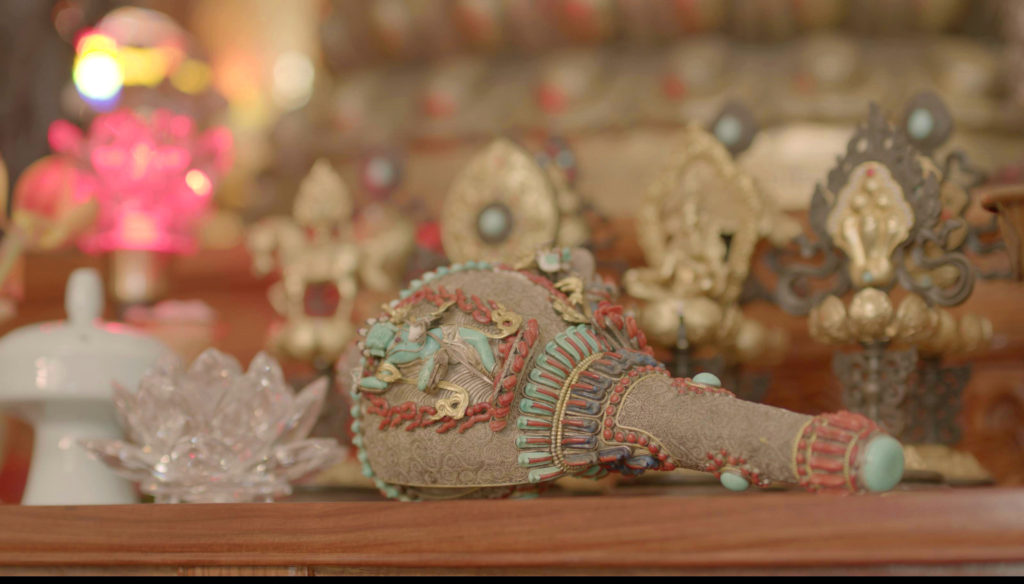
This kind of happiness is extremely deceptive
Most people obtain happiness by relying on external stimulation. This overall approach is fundamentally wrong. As a result, the range of available stimuli becomes narrower and narrower, the capacity to feel pleasure—the “faculty of sensation”—becomes weaker and weaker, and eventually happiness disappears altogether.